
Best Music EPK Examples That Get Artists Booked
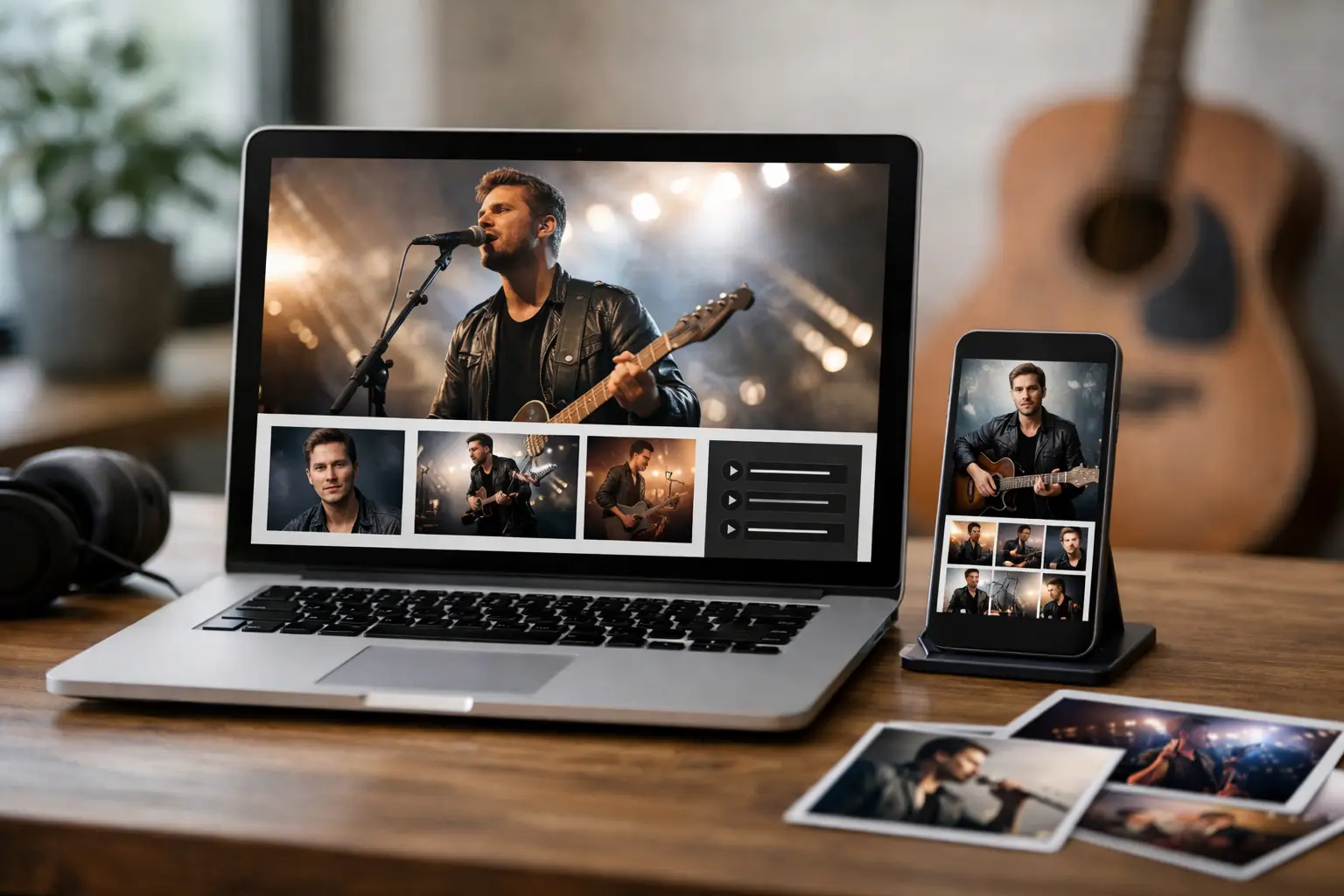
A promoter has just opened your electronic press kit between venue emails, tour budgets, and dozens of artist submissions. You have seconds to make the case: this artist is clear, active, marketable, and ready for the next stage. The best music EPK examples do not try to tell an artist’s whole life story. They make the right decision easy.
For African and diaspora artists building visibility across cities, countries, and platforms, an EPK is more than a digital résumé. It is a sales tool for bookings, press coverage, radio support, brand conversations, festival applications, and management opportunities. A strong song can start the conversation. A focused EPK gives the industry team enough confidence to act on it.
What the Best Music EPK Examples Have in Common
The strongest EPKs are built around one clear identity. Within the first screen, a reader should understand who the artist is, what they sound like, where they are based, and what they are promoting right now. If an Afrobeats singer is releasing a visual for a dance record, lead with that. If a Congolese rapper is positioning for a European club run, make the live energy and performance history visible immediately.
This is where many emerging artists lose momentum. They fill a page with every old single, every photo shoot, long paragraphs, and social statistics without a story. Industry people do not need more material. They need the most useful material, arranged in the order they would ask for it.
A high-performing EPK usually has a concise artist introduction, current release information, professional images, music and video access, selected achievements, live or press proof, and direct contact details. The difference is not simply having these sections. It is presenting them with intention.
5 Best Music EPK Examples to Learn From
These are not copy-and-paste templates. They are practical EPK approaches that work because each one serves a specific opportunity.
1. The release-first EPK
This format works best when a new single, EP, or video is the main reason people should pay attention. The opening section places the release artwork, title, release date, a short description, and immediate listening or viewing options front and center. The artist bio comes afterward, supporting the campaign rather than competing with it.
Picture an Afropop artist launching a romantic single before Valentine’s season. Their EPK opens with a clean cover image and a one-sentence hook: a warm, melodic record blending contemporary Afrobeats with Central African guitar influences. Beneath it are the official audio, the music video if available, and two or three usable press angles, such as the song’s inspiration or the creative team behind the visual.
This example succeeds because radio programmers, bloggers, DJs, and playlist editors can instantly identify what is new. Keep the description specific. “A global sound for everyone” says very little. “A bilingual Afro-R&B record built for late-night dance floors” gives a media contact something they can use.
2. The visual-led performer EPK
For artists whose image, choreography, fashion, or music videos drive discovery, visual proof should lead. This is especially effective for performers targeting festivals, entertainment blogs, brand campaigns, and social-first music audiences.
A strong visual-led EPK opens with one hero portrait or an arresting still from a video, followed by a short performance reel. It should show the artist in motion: commanding a stage, connecting with a crowd, or delivering a memorable visual concept. Static photos still matter, but a booking team needs to see whether the artist can hold attention beyond the recording.
The trade-off is speed. Do not bury the page under five autoplay videos, large files, or an overdesigned animation. One excellent reel, a current official video, and a downloadable selection of press-ready images are usually enough. The goal is to create excitement without making a busy music executive work for basic information.
3. The booking-ready EPK
A booking-ready EPK is built for talent buyers, venue managers, promoters, and festival programmers. It does not just say the artist performs live. It proves what that show looks like and what is required to present it professionally.
The most useful version includes a short live-show description, performance photos, notable past appearances, set length, lineup format, city or regional availability, and technical or hospitality requirements when appropriate. A solo singer with backing tracks has different needs from a six-piece band, and clarity prevents avoidable conversations later.
For an artist moving between African markets and diaspora venues in the United States or Europe, this EPK can also explain audience fit. Mention real evidence: sold-out showcases, community events, university appearances, support slots, or relevant festival stages. Do not inflate small wins into major headlines. Credibility travels farther than hype, especially with professional buyers.
4. The story-and-press EPK
Some artists have a personal journey that gives their music a stronger editorial angle. Maybe they were raised between Cameroon and Germany, merge traditional rhythms with modern rap, or use their writing to speak about migration, faith, identity, or ambition. In those cases, the EPK should give journalists a story worth developing.
The key is to avoid turning the bio into a memoir. Lead with a sharp positioning paragraph, then offer a slightly longer biography for writers who need context. Include a few facts that make the story verifiable: languages used in the music, cultural influences, collaborators, creative milestones, or the reason behind the current project.
The best version also includes selected quotes from credible coverage, radio interviews, or recognized industry figures. Two strong quotes are more valuable than ten vague compliments. If press coverage is still growing, replace quotations with a clear artist statement about the project. Honest, well-written context is better than invented momentum.
5. The partnership-focused EPK
Artists seeking commercial representation, brand work, film appearances, or cross-platform opportunities need an EPK that shows more than streams. This format is valuable for musicians who can also model, act, host, create content, or lead cultural campaigns.
The page should define the artist’s audience, visual identity, values, and available partnership categories. Include campaign-quality photos, selected social performance data, prior collaborations if they exist, and a direct point of contact for commercial inquiries. Brands are looking for audience alignment and reliability, not only a large follower count.
Be selective with numbers. Monthly listeners, video views, audience demographics, engagement rate, and ticket sales can all help, but only when they are current and meaningful. A modest but highly engaged diaspora audience may be more valuable to a focused campaign than a large, disconnected following. Context turns data into a business case.
Build Your EPK Around the Decision You Want
Before designing anything, ask one question: what should this reader do after viewing the EPK? Listen to the new record, book the live show, cover the artist, request an interview, or discuss a campaign? The answer determines the order of the page.
A release publicist needs easy access to clean music information and usable images. A festival programmer wants live proof and practical details. A journalist needs a story angle and accurate background. Trying to give every visitor the same experience can make the EPK feel generic. One master kit can work, but it should have clear sections that let each reader find their reason to say yes.
Your opening bio should also do real work. Aim for three to five sentences, not a block of promotional language. State the artist name, genre or sound, cultural position, current project, and one credible point of distinction. Write it in third person so a writer can quote or adapt it without rewriting everything.
Details That Make an EPK Feel Professional
Presentation signals readiness. Use consistent artist naming across artwork, streaming profiles, social channels, and the EPK. Choose recent photos that reflect the current era, not an image from a release cycle two years ago. Label everything clearly, including photo credits and the names of photographers or creative directors when required.
Contact information must be impossible to miss. Include the appropriate booking, management, press, and business contacts, with a real email address and response path. If the artist works with an agency such as BGC Melody, that representation should be stated clearly so promoters and media teams know who can authorize opportunities.
Finally, update the EPK whenever there is a meaningful change: a new release, fresh press coverage, a video premiere, a tour date, an award, or a key performance. An outdated kit quietly tells the market that the campaign may have stalled.
A great EPK does not need celebrity-level numbers or a giant catalog. It needs a focused story, proof that matches the opportunity, and a clear next move for the person reading it. Make that next move obvious, and your music has a better chance of leaving the inbox and reaching the room where decisions are made.
Latest Movie
The Princess, The Prince Reality TV Show
Cindy MbandoContestant Number: Princess 07To vote for her, send momo to 652473399 and write PSS 07 as REFERENCE.NOTE: 1 vote is 100FCFA, and it is through the momo number given above. You can vote as many times as you can. Remember, momo vote is 70%.Also like, comment, and share this video as many times as possible to maximize her chances.The Princess, The Prince Reality TV Show.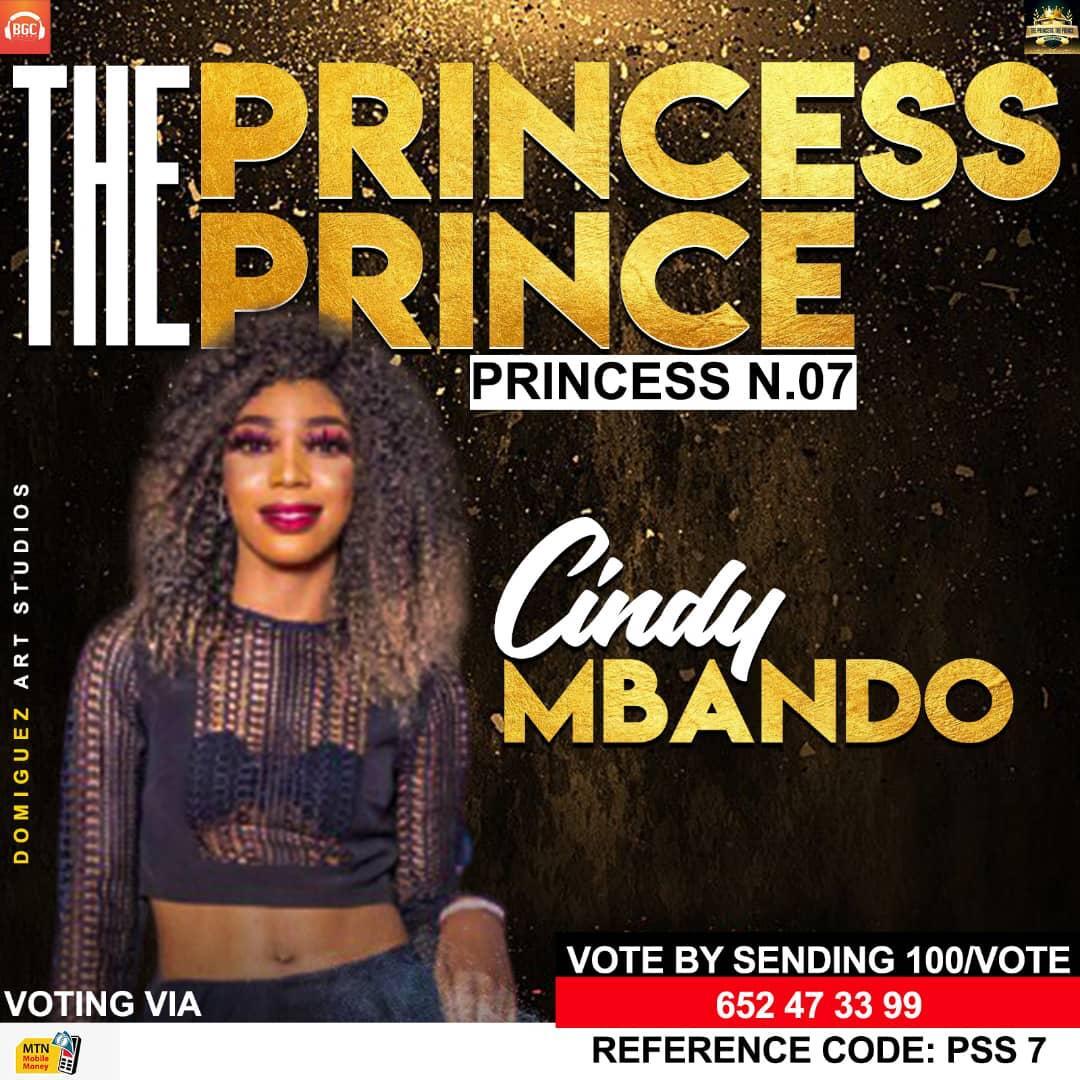
Cindy
-
Ziiana
-
Cameroonian artist Tasa
-



Comments
This post currently has no comments.