
How to Prepare an EPK for Musicians That Gets Booked
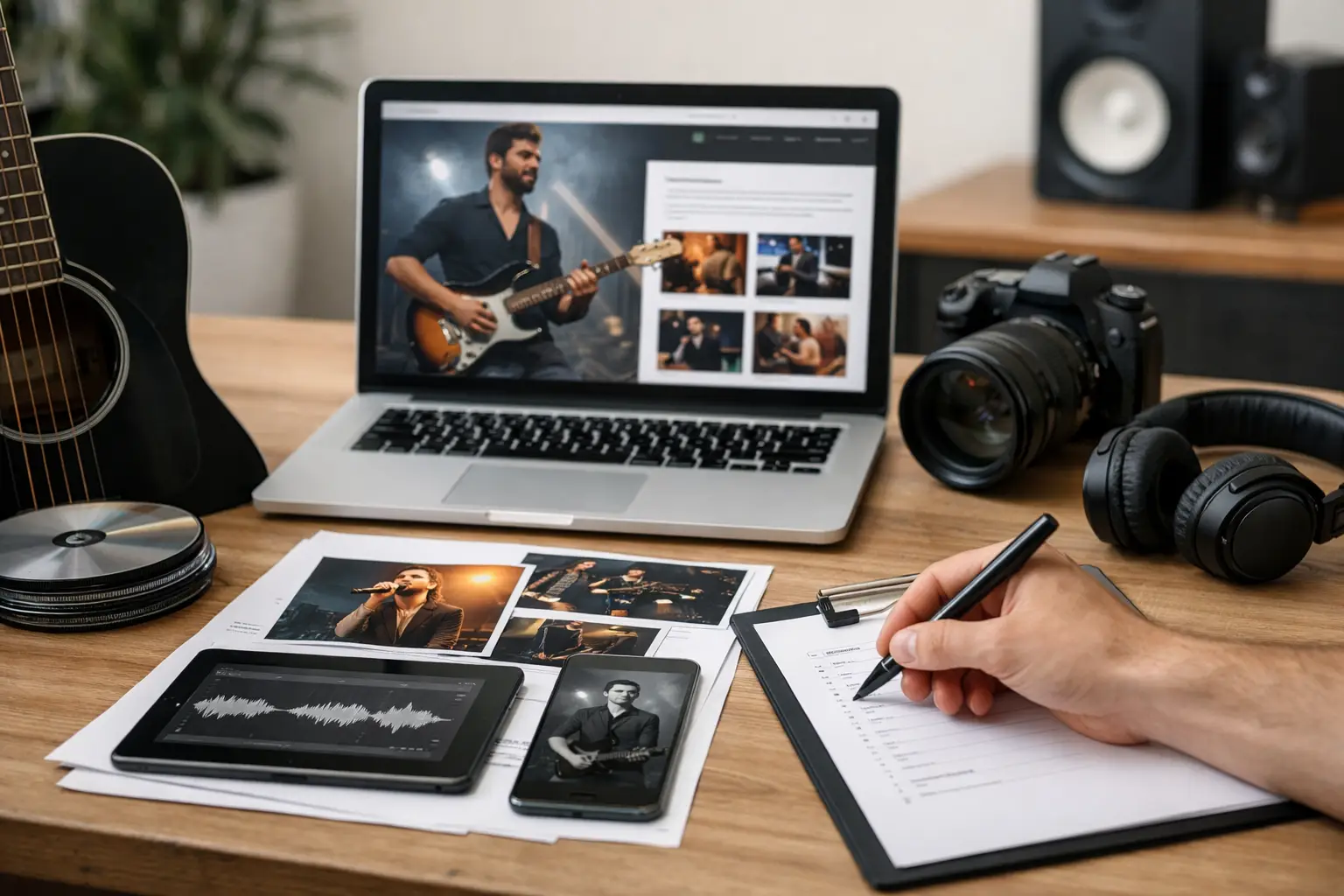
A promoter opens your EPK between venue emails, tour routing notes, and dozens of artist submissions. You have seconds to show that your sound, image, and team are ready for the opportunity. That is why learning how to prepare EPK musicians can actually use is not a paperwork exercise. It is part of your release strategy, your booking strategy, and your professional positioning.
An electronic press kit, or EPK, gives media teams, DJs, festival bookers, playlist curators, brands, and potential collaborators the information they need without chasing you for it. For African and diaspora artists building visibility across cities, countries, and platforms, a clear EPK can make your story travel as strongly as your music does.
Start With the Job Your EPK Needs to Do
A strong EPK is not a digital scrapbook. It should help someone make a decision: book the artist, cover the release, request an interview, add the record to a radio show, or discuss a partnership.
Before assembling files, decide what you are promoting. An artist with a new Afrobeats single needs a different emphasis than a rapper pitching a college tour or a singer seeking brand partnerships. If a release is the priority, lead with the single, its story, official artwork, video, and launch date. If booking is the goal, put your live performance footage, cities played, stage requirements, and contact details where they are impossible to miss.
This focus keeps the kit from becoming overloaded. Your full career history may matter later, but an EPK should lead with the clearest reason to pay attention now.
How to Prepare an EPK for Musicians: Build the Core Assets
The best EPKs are easy to scan, visually consistent, and updated often. A promoter should be able to understand your sound and your value in less than two minutes. Start with the essentials, then add proof that you are active and prepared.
A short, useful artist biography
Your bio should answer three questions quickly: Who are you? What kind of music do you make? Why is this moment in your career worth covering?
Avoid vague lines such as “the next big thing” or “a versatile artist with a unique sound.” Give the reader real texture instead. Name your city or cultural connection, the musical lane you occupy, key influences if they are meaningful, and the current release or achievement behind the pitch.
For example, a useful bio might explain that a Cameroon-born artist based in the DMV blends Makossa rhythms, Afrobeats percussion, and melodic rap, then identifies the new record as a statement about diaspora ambition. That tells a writer or curator far more than a page of general praise.
Prepare two versions: a 50-word bio for quick listings and a 150- to 200-word bio for press features and event programs. Write in third person unless a campaign specifically calls for a personal first-person statement.
Music that plays immediately
Include your strongest one to three tracks, not every song you have released. Choose music that fits the opportunity you are pursuing. A high-energy dance record may sell a festival slot, while a more intimate record might be the better choice for editorial coverage.
Label each track clearly with the artist name, song title, release date, producer credits where relevant, and explicit-content status. If there is a focus single, say so. Do not make people guess which record they should hear first.
Only share music that is mixed, mastered, and cleared for promotion. An unreleased demo can be appropriate for a private A&R conversation, but it should not be the centerpiece of a public press kit.
Press photos and visual identity
Use high-resolution photos that look like the artist people will meet onstage, in interviews, and on social channels. Include at least one portrait, one landscape image, and one live-performance image if you have credible live material. This gives publications and promoters options for different layouts.
Consistency matters. Your cover art, artist photos, logo, styling, and color choices should feel connected. You do not need an expensive fashion campaign to look professional, but you do need intentional visuals. Blurry event snapshots, images with heavy filters, and files covered in text create extra work for press teams.
Name photo files properly. “ArtistName_PressPhoto_Landscape_2026” is more useful than “IMG_4482.” Add photographer credit information and usage guidance so outlets can publish without uncertainty.
Video and live-performance proof
For artists seeking bookings, live footage is often more persuasive than stream counts. A booker wants to know whether you can hold a room, connect with a crowd, and deliver your record beyond the studio version.
Use a short, well-shot performance clip if possible. It does not need a huge stage or celebrity guest. Clear vocals, visible audience energy, and confident movement are what matter. If you are still developing your live set, include an official music video instead, but be honest about your performance experience.
A visualizer can support a single campaign, yet it rarely replaces a polished music video or a strong live clip. Use the asset that proves the claim you are making.
Add Credibility Without Inflating the Story
Media quotes, radio spins, playlist placements, award nominations, notable performances, and collaboration credits all help a decision-maker understand your momentum. Use only claims you can verify. One legitimate quote from a respected community outlet is better than six anonymous compliments.
If you do not have press coverage yet, do not panic. Emerging musicians can show progress through other proof: a completed release schedule, quality visual content, a growing local audience, a support slot, a successful listening event, or clear engagement around a release. The goal is not to pretend you are established. The goal is to show that your team is organized and that your career has direction.
For diaspora artists, context can be a genuine advantage. A story rooted in Congolese rumba, Cameroonian pop, Afro-fusion, or a cross-cultural community can give journalists a meaningful angle. Just do not reduce your identity to a marketing label. Connect culture to the actual music, audience, and creative vision.
Make Contact and Booking Information Obvious
An EPK fails if the right person cannot reach you quickly. Include a dedicated business email, the name of the manager or representative, and a phone number only if someone can respond professionally. Keep personal information separate from public business information.
For booking-focused kits, state your home market, available regions, usual set length, and whether you perform with a DJ, band, dancers, or playback setup. A short technical rider can be attached when a promoter is seriously interested, but your initial EPK should communicate the basics without becoming a production manual.
If you have social platforms worth showing, list the most active accounts and use current figures. Do not fill the page with every platform you joined years ago. A focused presence on two channels is stronger than five inactive profiles.
Organize It for Fast Use
Your EPK can live as a clean web page, a well-designed PDF, or both. A web version is easier to update during a fast-moving campaign, while a PDF can be useful for direct outreach and event submissions. What matters is that the experience works well on a phone as well as a laptop.
Keep navigation simple. The reader should find the bio, music, videos, photos, press highlights, and contact details with no confusion. Avoid autoplay audio, oversized file downloads, complicated passwords, or design effects that slow the page down.
Before sending it out, test it like a busy editor would. Open it on your phone. Check every file name, credit, date, and email address. Ask one person who does not know your career to look at it for one minute, then tell you what they remember. If they cannot identify your sound, current release, and contact person, revise the kit.
Update the EPK With Every Serious Move
Treat the EPK as a living campaign asset. Update it after a new release, video premiere, radio achievement, major show, press feature, tour announcement, or meaningful collaboration. Remove outdated singles from the top section when they no longer represent the direction of the project.
This is especially valuable when pitching across borders. A journalist in New York, a promoter in Atlanta, and a festival programmer in Europe may discover you months apart. Each should see an accurate picture of where your career stands, not a kit built around last year’s campaign.
BGC Melody works with artists whose music and stories move between African markets and diaspora audiences, and that kind of movement requires presentation that is clear enough for any industry gatekeeper to act on.
Your EPK does not need to make you look bigger than you are. It needs to make it easy for the right people to recognize where you are going and confidently invite you into the next room.
Latest Movie
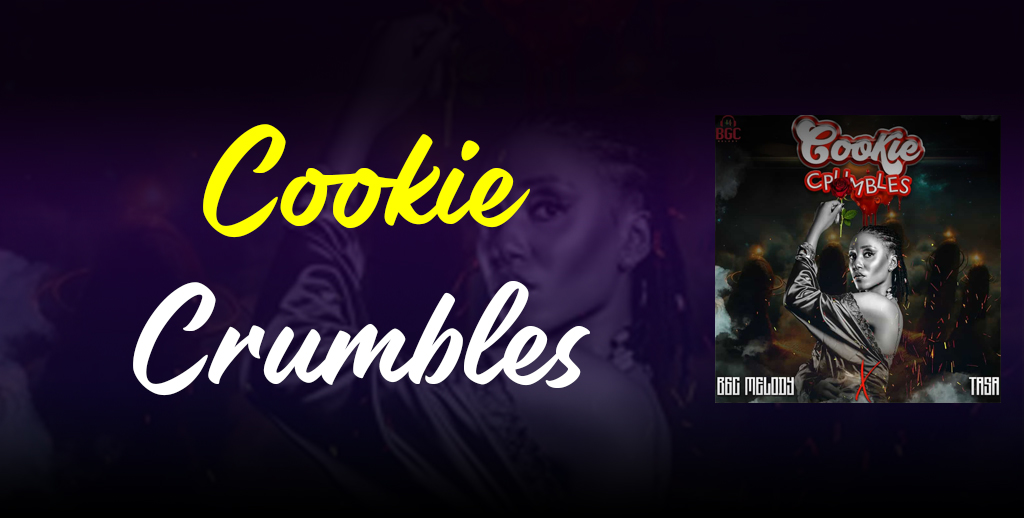
The Princess, The Prince Reality TV Show
Cindy MbandoContestant Number: Princess 07To vote for her, send momo to 652473399 and write PSS 07 as REFERENCE.NOTE: 1 vote is 100FCFA, and it is through the momo number given above. You can vote as many times as you can. Remember, momo vote is 70%.Also like, comment, and share this video as many times as possible to maximize her chances.The Princess, The Prince Reality TV Show.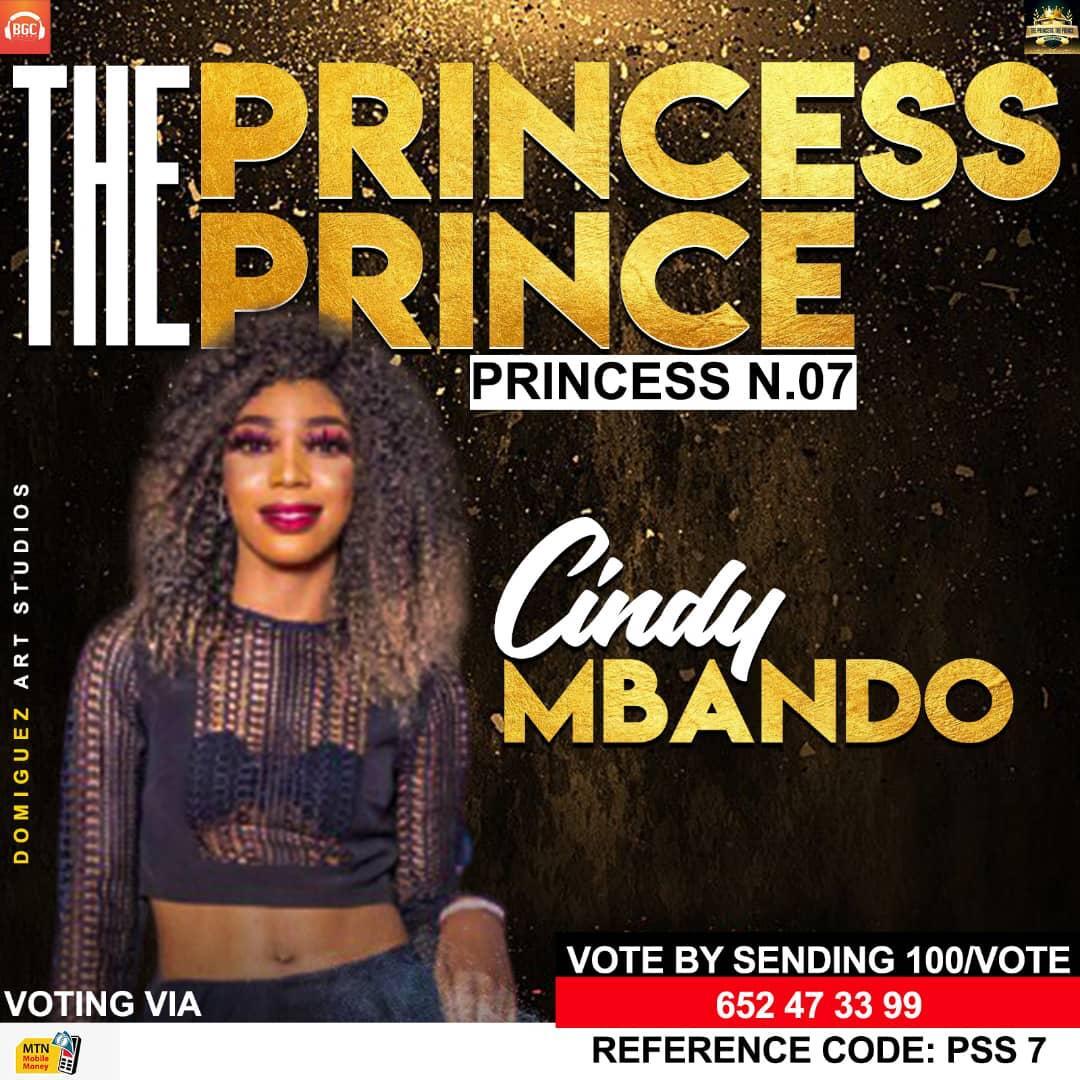
Cindy
-
Ziiana
-
Cameroonian artist Tasa
-


Comments
This post currently has no comments.